
OutTheGC
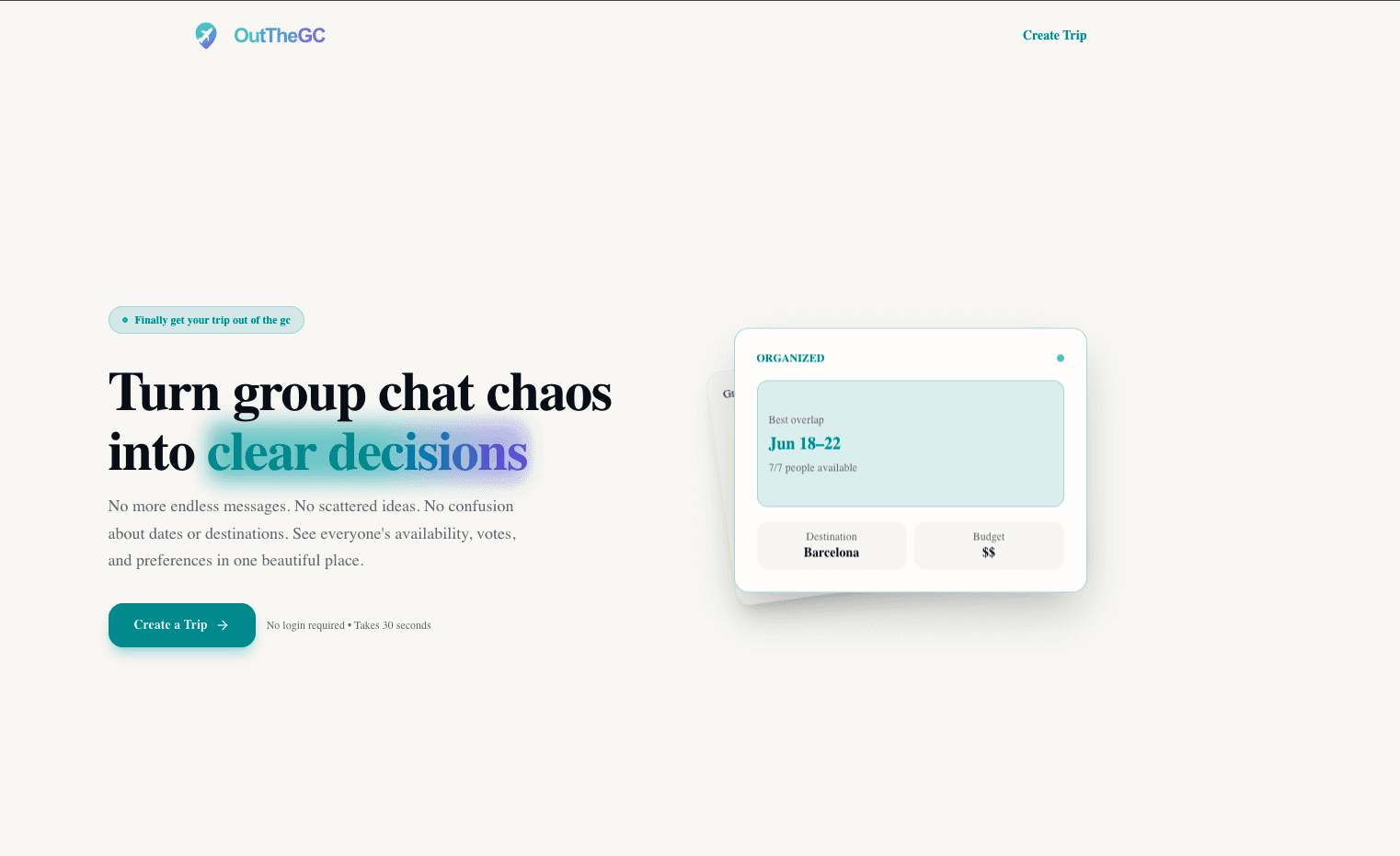
OutTheGC is a link-based group trip planning tool that centralizes availability, preferences, and ideas into a single shared decision surface, using AI summaries to turn scattered inputs into clear, actionable plans.
Product DesignFull-StackAICollaborationConsumer
Product Designer & Full-Stack Developer · January 2026
Build journey
- Started from the frustration of coordinating trips through group chats and notes
- Initially explored a traditional planning dashboard, but found it too heavy for casual users
- Pivoted to a link-based system where anyone can join without accounts
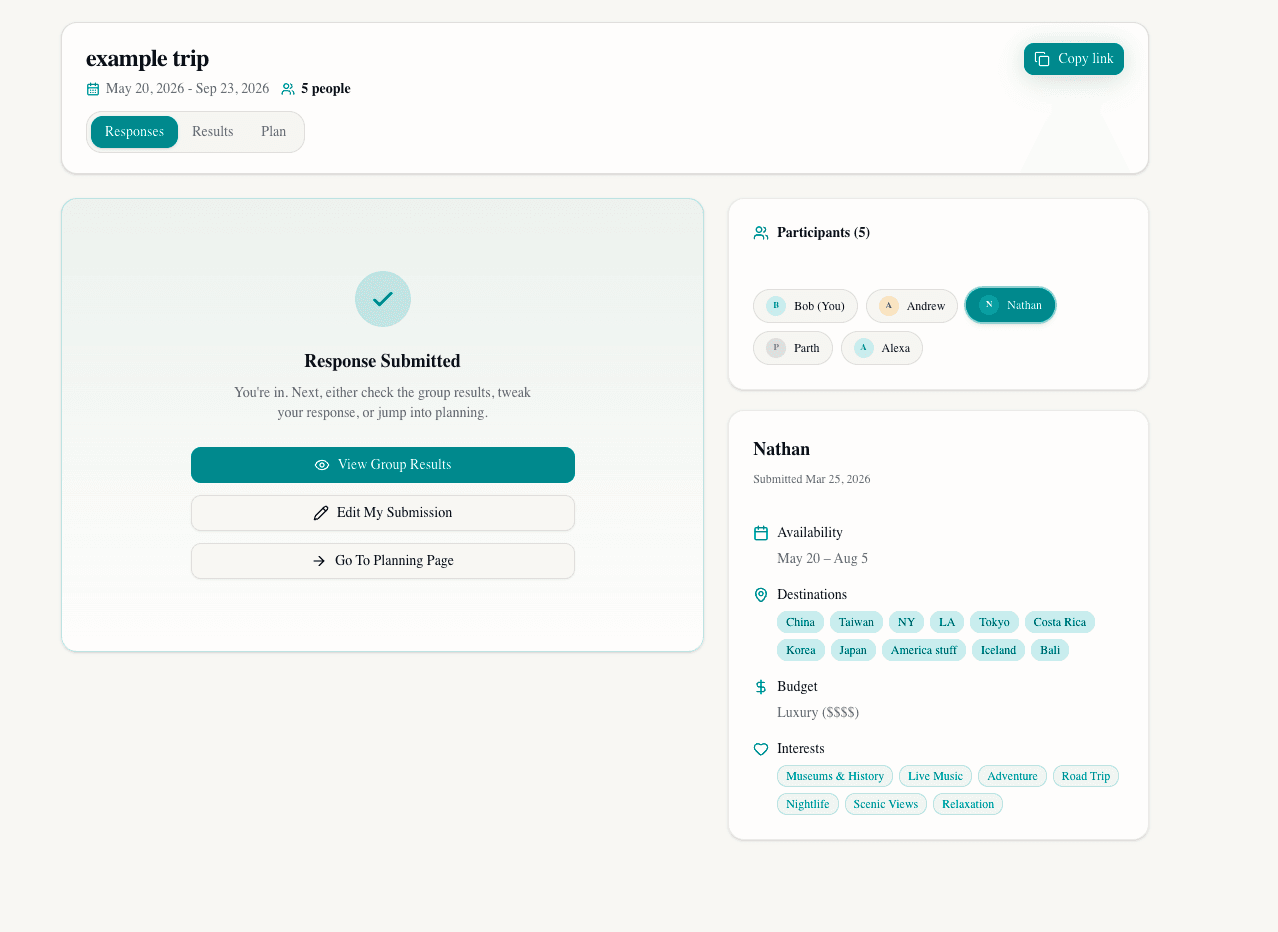
- Built a lightweight submission flow for availability, budget, and preferences
- Introduced AI summaries to synthesize group inputs into clear insights
- Iterated on UX to reduce friction and keep the experience fast and intuitive
Architecture / technical design
- Frontend built with Next.js to handle dynamic routing and shareable event pages
- Event-based data model where each trip acts as a container for participant inputs
- Users submit structured responses (dates, budget, destinations, notes)
- Backend aggregates submissions into a unified dataset
- OpenAI API processes aggregated inputs to generate summaries and highlight consensus/conflicts
- Link-based access system avoids authentication friction while enabling collaboration
Results / impact
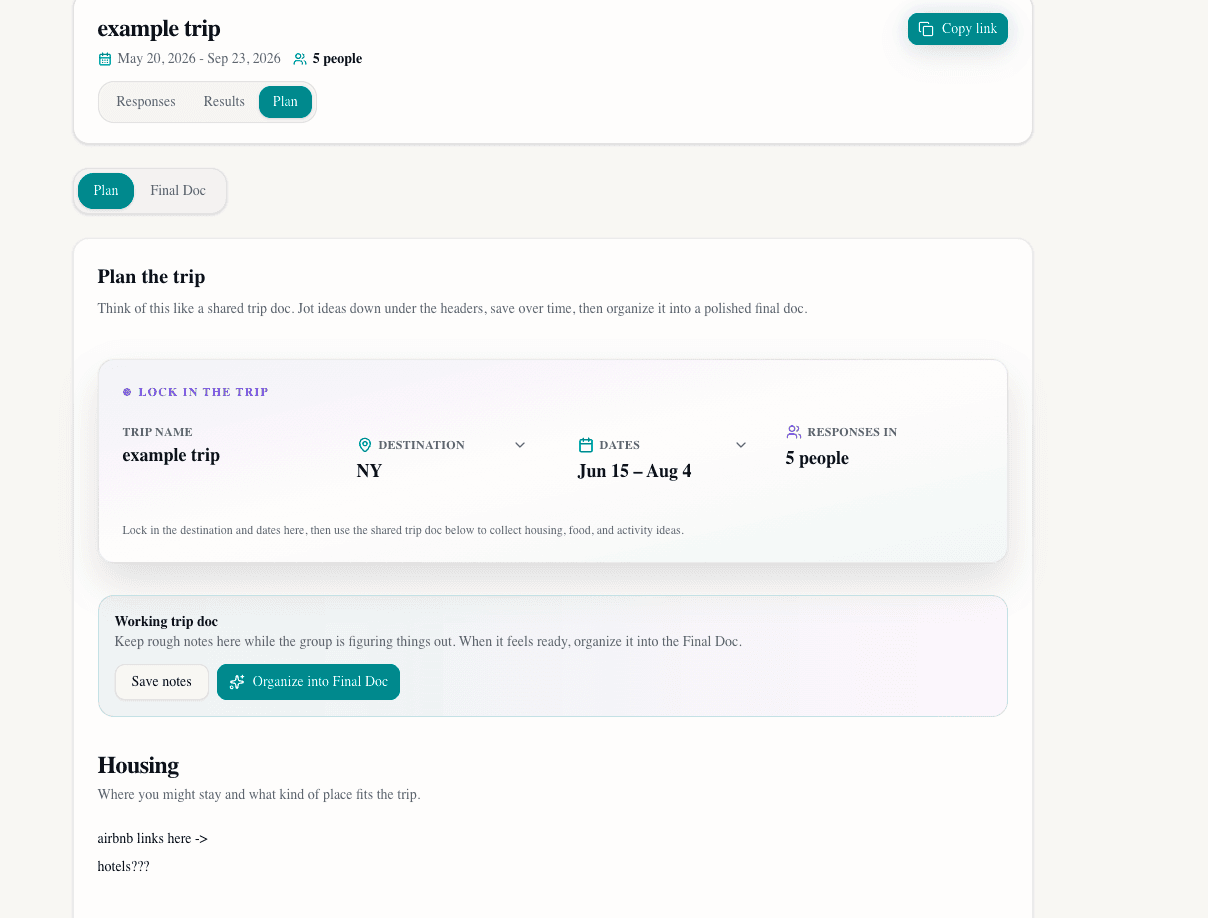
- Consolidated fragmented planning into a single shared interface
- Reduced coordination overhead by surfacing common themes and constraints quickly
- Improved usability compared to earlier iterations by prioritizing speed and minimal onboarding
- Enabled faster group alignment without requiring heavy tools or setup
Media
Lessons
- Simplicity and low friction are critical for consumer collaboration tools
- Removing account barriers significantly increases participation
- AI is most valuable when it summarizes and clarifies, not when it replaces interaction
- Over-engineered solutions can reduce adoption in casual use cases
Future work
Expand OutTheGC with persistent storage and user accounts for returning groups, introduce collaborative permissions for editing and managing trips, and build deeper itinerary planning features that extend beyond initial alignment. Enhance AI capabilities to better handle conflicting preferences and visualize trade-offs, and improve the UI with richer summaries and interactive planning views.